The First Climate Decade

In response to Fred Wilson‘s 2021 predictions post – which is as clear a sign as any how decisively climate crisis has moved to center stage of our public discourse, and in which Fred Writes: “If, because of what we learned in the Covid Pandemic, a good job no longer requires someone to live in a low lying flood-prone city like Miami or NYC or a city that is burning like SF or LA, we will see many people in the US choose to leave those places and adopt new homes that are less impacted by the climate crisis” – I have a question/challenge: Where are those places in the US “that are less impacted by the climate crisis,” other than perhaps certain parts of the Upper Midwest?

Much of the West is now menaced by fires and water shortages (not to mention the climate-unrelated threat of catastrophic seismic activity). California, as we dreamt it, is over.

The Southwest faces extreme heat and looming drought which are likely to drive a sharp reversal of population growth in the cities of the aridlands, while the scourge of vector-borne and fungal disease will only intensify across the entire Sunbelt (and especially in the Southeast).

Meanwhile, the Southeast also faces the combined threats of extreme heat (wet heat, at that), tropical storms, and sea-level rise.

Much of the Midwest will continue to experience floods, extreme heat, and extreme weather (tornadoes, derechos, deadly hail storms) that harms people and damages crops, and states as disparate as Colorado, Texas, the Dakotas, Pennsylvania, and Ohio face the lasting ecological devastation of the fracking boom across the Bakken, Permian, and Marcellus which will resonate for generations to come.

(Incidentally, at least one major nuclear accident in the US in the 2020s would not be surprise. Not to be glib, but Turkey Point is a leading contender.)

That leaves Appalachia, the mid-Atlantic, and the Northeast, all of which face some threats from extreme weather (in particularly, rain-driven flooding) and extreme heat, but generally not to the same extent that these threats menace other regions. Coastal parts of the Northeast and mid-Atlantic, of course, face risks from sea-level rise and tropical storms, though, again, the further north one goes, the less intense the tropical storm risk grows. Lyme disease is a challenge – characteristic of our era, and evocative of the toll that malaria took on the Imperial Roman elite – for the Northeast, while aging infrastructure is a problem shared across all three of these regions.

Where, then, will all these eager voluntary internal climate migrants go? Duluth, as the New York Times has foretold? (I’ve partially side-stepped the Intermountain West and the High Plains, so perhaps these will be the destinations of choice.)

Contrarian though the position sounds – barring a not-unforeseeable rapid ice-sheet collapse scenario – NYC is relatively well-positioned among major US cities from a climate standpoint, at least for ~the rest of this century. Its temperate weather is, if anything, improving by most people’s standards. Although certain of its geographies (the Rockaways, the South Shore of Staten Island, many of the neighborhoods on the north side of Jamaica Bay) face existential risk from sea-level rise as Superstorm Sandy demonstrated, much of the city sits relatively high above sea level. Unlike Miami, NYC is not doomed by porous geology. Unlike Houston, it is not subject to routine tropical storms. Unlike Phoenix, its day-time temperatures are unlikely to be routinely outside the range survivable for many humans. Unlike the cities of California, it is unlikely to be at the mercy of routine, devastating forest fires and smoke until all the surrounding forests burn. Unlike a great many cities, it has a secure, unusually well-protected water supply and access to diverse regional food supply.

We, of course, face the immense challenge in NYC that much of our essential infrastructure lies in the floodplain (the Hunts Point food distribution center, much of our municipal solid waste apparatus, all 13 of our wastewater treatment plants, the Port of NY/NJ, all three major airports) and/or is menaced by flooding (as in the case of the subway, many hospitals, many highways, much of our energy infrastructure). Immense, expensive, sometimes ill-conceived plans are in motion to protect against many of these risks, at least based upon mid-century climate predictions, but there is, of course, a significant stochastic element at play here. Where will the big storms hit when and at what cost in lives and damage?

I agree with Fred that climate adaptation will be “a huge investable trend for many years to come,” but many investments insufficiently-steeped in complexity thinking are likely to end badly, and either way, the focus in this climate decade, and those to follow it, should be on mitigation before adaptation (even as adaptation will be necessary) and people over profits (even as the profit motive isn’t going anywhere, and may, at times, be bent to serve human needs).

By March, This May All Be Over

People forget very quickly, which can be both a blessing and a curse.

As we enter into a period of vaccine triumphalism in the United States, at the same time that our national daily COVID-19 death tolls break and re-break records, it’s instructive to remember that public health approaches to stop a pandemic like this one have been well understood for more than a hundred years (perhaps even for more than five hundred, given that quarantine – as word and practice – derives from measures taken by Italian city states in the late 1340s to stop the spread of the plague).

But remembering is hard, and mostly, the public focus in the US has shifted to how soon we can forget – the pandemic, the year 2020, everything we should’ve learned. The question that dominates all attention now is: When will this all end?

Tl;dr on what follows – I point out the widespread failure to take into account the fact that a significant and rapidly growing fraction of the US population almost certainly already has immunity to COVID-19 through having contracted and survived the SARS-CoV-2 virus; conclude, through some back-of-the-envelope math, that there’s a reasonable case to be made that – through the combination of infection-based and vaccine-based immunity – herd immunity will be reached in the US sooner than expected (my best guess is sometime early in the spring); suggest, with no expectation my suggestion will have any impact, that a better vaccination strategy would involve not vaccinating anyone known to have already survived infection with SARS-CoV-2 because there is very strong empirical evidence that reinfection almost never happens; and reflect briefly on the injustice in global disparities in vaccine access. The math is all very simple, so please, don’t be daunted. Read on.

Let’s do some math. At the time of this writing (late morning EST on Saturday, December 19th), the New York Times shows ~17.5 million confirmed cases of COVID-19 in the United States and ~314,000 deaths. This, of course, makes no sense – though it’s no fault of the Times as the paper of record is just tracking (and beautifully visualizing!) the official numbers – because there is very strong evidence at this point that the case fatality rate (CFR) for COVID-19 is somewhere between 0.5% and 1%. Given that the virus seems to have spread more aggressively in recent months amongst younger people and that advances in knowledge about and treatment of COVID-19 have led to improved outcomes, I’m going to assume a CFR of 0.5% in the US, which implies that 1 out of 200 people who become infected with the virus end up dying from the disease.

Additionally, I’m going to assume that there have actually been 350,000 COVID-19 deaths to date in the US because there is good evidence that deaths have been consistently under-reported, and a 10% rate of under-reporting seems conservative but in the ballpark.

Now, combining those figures, we arrive at an estimate for the actual number of COVID-19 infections in the US (which is predicated on the fact that it is harder to miss deaths than infections, thus mathematically sound to extrapolate from deaths to total infections):

(350,000 deaths) x (200 infections/death) = 70 million COVID-19 cases in the US

That’s a lot more (~4x) than the official count; however, deaths are a lagging indicator of infections, so really, this math suggests that there had already been 70 million COVID-19 infections in the US three weeks ago (assuming, again conservatively, that the average time from infection to death for people who, tragically, die from what should have been a largely preventable disease is three weeks). Lately, ~3,000 people have been dying from COVID-19 each day in the US. Applying math similar to that above, we can estimate daily infections:

(3,000 deaths/day) x (200 cases/death) = 600,000 cases/day

Again, that’s a lot more (~3x) than the official figures, which have lately been above 200,000 confirmed cases per day. Given that these are very approximate numbers anyway, I’m going to round down to half a million cases per day in the spirit of conservatism and to make the math easier. Now, let’s say that there have been 500,000 new cases per day in the US for the past three weeks, and let’s round to 20 days, again for convenience. Then we’d expect – on top of the 70 million cases implied above by the current approximated actual US death toll (an estimated 350,000 deaths) – roughly the following number of additional US COVID-19 cases:

(500,000 cases/day) x (20 days) = 10 million

That suggests that there have been ~80 million total (70 million + 10 million) COVID-19 cases in the US so far. That’s roughly a quarter of our population of ~330 million people.

Okay, but aren’t people who have been infected with COVID-19 still susceptible to re-infection. The short answer appears to be: No. To quote the website of our beleaguered (because under political assault) CDC: “Cases of reinfection with COVID-19 have been reported, but remain rare​.​” From the standpoint of public health, all of us should continue to behave as if we are both at risk, and pose a potential a risk to others (certainly, that’s been my practice, although I’m almost certain that I had COVID-19 in the second half of March), but from the standpoint of empirical evidence and precedents derived from knowledge of other human coronaviruses (and human viral infections in general), there is a strong case to be made that the vast majority of people who become infected with SARS-CoV-2 are not susceptible to reinfection, at least in the near-term.

Strangely, this fact has not been incorporated into the discourse around vaccine rollouts, perhaps because it smacks of the discredited (and sadistic) herd immunity approach to COVID-19 response; however, while such a herd immunity strategy is idiotic as a public health measure, herd immunity is a thing.

Now, it has been very hard to get a handle on what the timeline of vaccine distribution will be in the US, but according to Business Insider, “Moncef Slaoui, the chief advisor to Operation Warp Speed, has estimated that 20 million Americans could get a COVID-19 shot before the end of 2020 [… and… ] that the US could immunize 100 million people by the end of February.”

There are roughly 70 days between now and the end of February. Let’s imagine that the torrid rate of spread of COVID-19 in the US continues unabated (not an unreasonable assumption given that many people in the US still seem to be planning to travel over the holidays and to host or attend indoor gatherings); that would lead to roughly the following number of additional cases during those ~70 days:

(500,000 cases/day) x (70 days) = 35 million

That’s a lot, and these are approximations, so let’s be more conservative again and guess that there will be only 30 million additional cases between now and the end of February. That would bring our total national case count to 110 million (80 million + 30 million) which, conveniently, is roughly one-third of the US population.

Okay, finally, let’s assume, perhaps wrongly, that past history of SARS-CoV-2 infection and vaccination against COVID-19 are independent events, such that, if 100 million people are actually vaccinated by the end of February, we’d expect one-third of those vaccinated to be people who had actually already been infected with SARS-CoV-2. That would then imply, obviously, that two-thirds of those vaccinated would not previously have been infected:

(100,000 million) x (2/3) ~ 67 million

I’m going to round that to ~70 million people vaccinated who had not previously been infected with SARS-CoV-2. If we add that 70 million to the 110 million people we’ve estimated will have already been infected by the end of February, we get 180 million people with meaningful immunity to COVID-19.

With respect to the percentage of the population that needs to have immunity to COVID-19 before herd immunity will be reached, estimates vary, but 70% seems to be a pretty widely used figure. Given a total US population of ~330 million people, that yields:

(330 million) * (70/100) ~ 230 million

Odds are that even a lower rate of population-level immunity would be enough to break epidemic community spread, although the utter failure of large portions of the US population to take even the most basic preventive measures calls that hopeful notion into question. Still, 180 million people (~55% of the US population) with some form of immunity by the end of February would put us, nationally, surprisingly close to the 70% figure posited to achieve herd immunity. Now imagine, instead that, only people who had not previously been infected with SARS-CoV-2 were immunized. Then you’d end up with ~110 million people with immunity post-infection and another ~100 million with immunity through vaccination for a total of ~210 million people (~64%) with some form of immunity. That’s even closer to the requisite 230 million. (More on this in the post-script below.)

Either way, what all this math suggests to me is that the pandemic in the US will likely be over by March or April, given the devastating amount of transmission that is already largely “baked in,” and so long as the vaccine rollout proceeds roughly as has been outlined above.

That will make for a long year for those of us who remember the start of March in New York City. This conclusion also offers a very strong reason for people, especially those at risk, to continue to take significant precautions to protect themselves (given that the Federal Government is doing next to nothing beyond Operation Warp Speed, to address the pandemic, and much of the population is caught in the throes of delusion and sociopathy): The end is in sight. It also points to the much-remarked-upon-but-still-profound injustice that the US population will enjoy near universal vaccine rollout before people in many other parts of the world even begin to have vaccine access.

Clearly, rich countries like the United States don’t plan on vaccinating their entire populations multiple times over, and, as Dr. Krishna Udayakumar explained on a recent episode of Democracy Now! (during which he also spoke about COVAX and the prospect for wide global distribution of vaccines developed in China), the governments of some rich countries have “made clear that if and when they have excess doses available, they envision making those available for low-income countries.” Vaccine hand-me-downism is not an excellent approach to ensuring public health globally, but it is among the prevailing paradigms for now.

All of this should be taken with a grain of salt. I’m neither an epidemiologist nor a mathematician, but the failure to account for the role of natural infection in driving immunity rates in the US is likely leading to an over-estimation of the time to herd immunity, just as an under-estimation of how bad the fall wave of the pandemic would be led some of us to over-estimate how long it would take to complete clinical trials and have vaccines ready under EUA from the FDA.

As we prepare to forget, I only hope we’ll also learn to remember, among other things, how little we know; how swiftly things can change; and how frequently inertia (or a belief that how things are is how things will be) can obscure the relationship between what has already been done and what is now very unlikely to be undone as the future unfolds. Such a line of thought obviously also has ramifications with respect to climate crisis.

Postscript: Unfortunately, our failed national testing strategy means we have very little information about who has and has not been infected with SARS-CoV-2, which complicates any plan to only vaccinate those who have not been infected (especially given the extent of asymptomatic infection and the unreliability of serological tests); however, even if only people with PCR-test confirmed cases of COVID-19 who were willing to forego/postpone vaccination voluntarily were skipped over in the vaccination queue, it would likely lead to millions, or even a low tens of millions of as-yet-uninfected-so-not-immune people getting the vaccine sooner than they otherwise would have.

Please, Please, Please, Cancel Your Holiday Plans, Already

Unless your holiday plans are to celebrate with your immediate household, or to see a friend or two outside while taking appropriate precautions. Then you should be fine.

Since last posting about the pandemic in August, I’ve regularly felt compelled to resume the urgent writing that consumed my spring; however, whereas, then, I felt I had something to contribute to and from New York City, as we suffered mass trauma and avoidable catastrophe, of late, it has been unclear to me what I could possibly add to the conversation against the backdrop of our current national meltdown. Although NYC’s spring COVID-19 crisis did not unfold as fast as it felt like it did, from the standpoint of most people living through it, it was a lightning quick, “unforeseeable,” and “unprecedented” event. By the fall, we had all the information we could possibly have needed to avert a repeat of the spring tragedy, and yet we have lurched in slow motion into this nationwide mass-fatality train wreck. Hence my silence.

I’ve, of course, been discouraged as even excellent independent media outlets like Democracy Now! engage in knee-jerk reportage that distorts the facts, but by and large, the tragedy unfolding today is not a function of insufficient information or incomplete knowledge about SARS-CoV-2. It is, in some part, a function of mis- and dis-information about COVID-19, but that’s far beyond the modest scope of what I could hope to impact in my writing here, and in the meantime, scientific progress in understanding this disease has proceeded at a remarkable pace, including in the form of the multiple vaccines which should soon receive Emergency Use Authorization from the FDA.

All that said, after witnessing many people – including many people who should have known (and did know) better – decide to travel anyway for Thanksgiving and to attend exactly the sort of small, indoor gatherings that we all know, at this point, are responsible for a disproportionate fraction of COVID-19 transmission, I’m writing briefly to urge you: Cancel your holiday plans. Don’t travel. Don’t attend or host any indoor get-togethers.

Just chill. Take it easy. Be patient. That is, if you’re someone who enjoys that luxury. This has been a tough year – much tougher for some than for others – and while many people (e.g., those who are unsheltered, incarcerated, precariously employed, etc., etc.) lack the ability to exercise much control over their level of risk, every last person who enjoys the privilege of exercising such control should do so.

With any luck, we’ll be largely on the other side of this by the spring, and properly coming out if it by the summer of 2021. The 2020s can be the transformative decade we need it to be, and my focus has, of late, been squarely on the once-in-a-civilization convergence of planetary challenges we now face. So if you need something to get you through this hard winter, consider throwing yourself into climate activism, and if you need a little more inspiration not to put all of us at additional risk by being careless for Christmas (or Hanukkah, or Kwanzaa, or New Year’s), here’s a piece I wrote, in anger, but opted not to publish on Thanksgiving morning:

Thanks for Nothing, You Fucking Idiots

You had to travel. Every relevant public health body warned that you’d be putting yourself and others at risk if you did. But you had to travel. How could your life be complete if you missed even one Thanksgiving dinner with your family? The ritual. The comfort. The annual celebration of our country’s whitewashing of our genocidal settler-colonial history.

You were amply warned not to travel, but you went ahead and traveled anyway. You waited five hours for an unreliable rapid test because it reduced the risk, right? (Wrong. It was a waste of your time and it didn’t.) You donned your K/N-95 mask, braved the airport, tried not to breathe for the entirety of the flight. You did it all, all for this moment. Thanksgiving morning with mind-numbing hours of football and gluttony stretching ahead of you like a desert or the barren asphalt of the Interstate.

Was it worth it? Let me answer for you: It wasn’t. Your colossal selfishness has cursed the rest of us to a December, and likely January, of deepening national nightmare. Your collective act of vanity and stupidity has consigned us to additional economic free-fall, to harsher renewed lockdown measures. I write this with confidence, as, from a statistical standpoint, these outcomes are more or less guaranteed. A month ago, 1,000 people a day were dying in this country of COVID-19, and that came to feel routine; now, it is 2,000, but wasn’t it higher in the spring? By the end of December, look for it to be three or four. We always strive to be the exception, right? What a tremendous Christmas gift that will be.

You have done this to us, as to yourselves. Now live with it.

Enjoy your fucking turkey.

Postscript: If you made it to the end of this post, now reward yourself with some COVID-punning tweets.

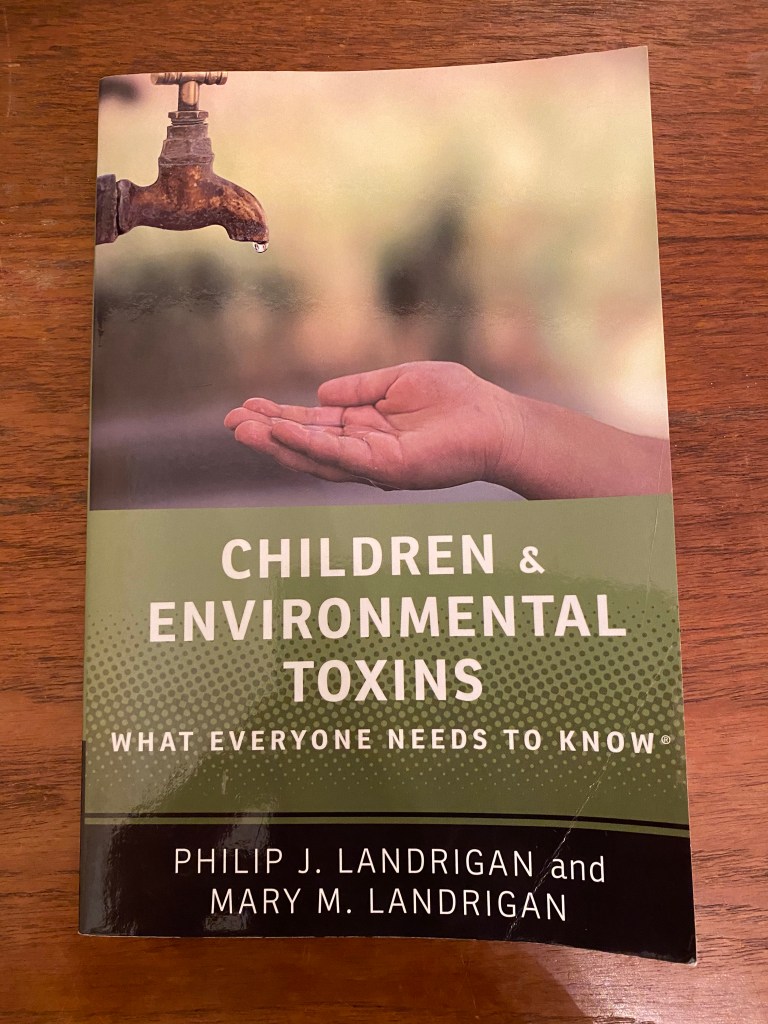
Reading Recommendation #1: Children and Environmental Toxins

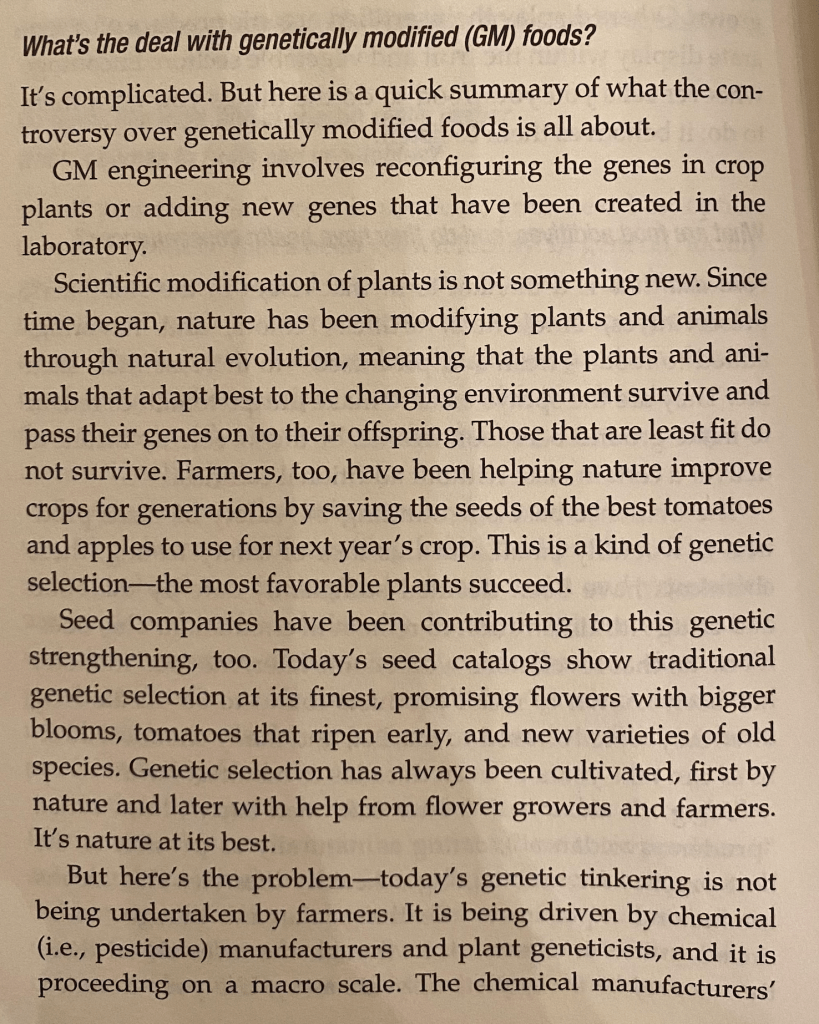
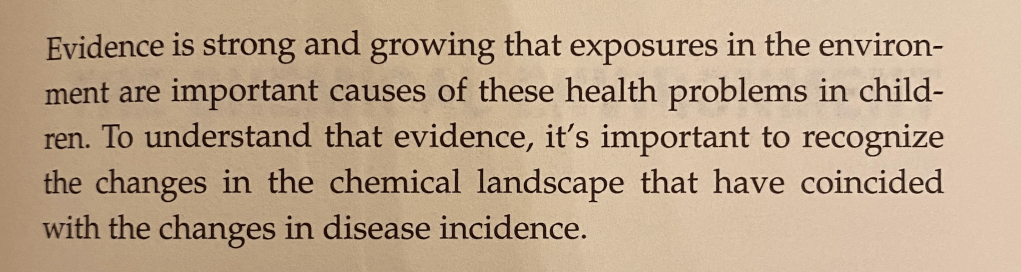
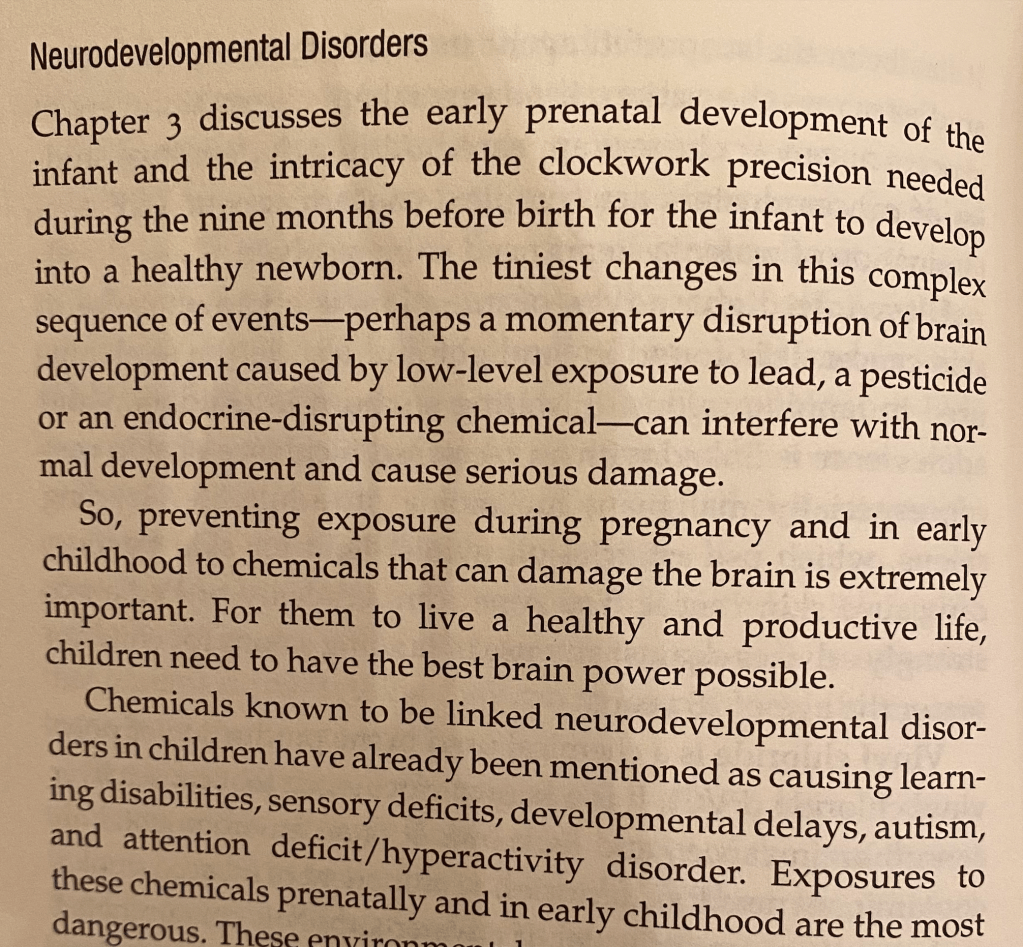
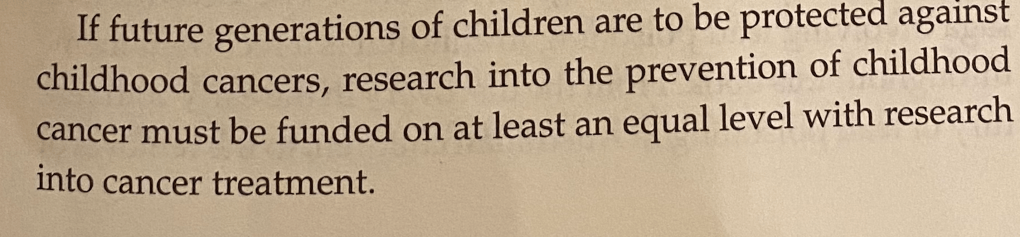
Trying something new this week, and devoting a single, short post to a reading recommendation and some excerpts. Without further ado, I recommend:

You can find it at bookshop.org

Here are some excerpts that jumped out at me:

The claim is that GMO crops are safe and that they help feed the world. The reality is that GMO crops are designed to survive application of pesticides (mostly Monsanto’s, so now Bayer’s, glyphosate); many “weeds” are rapidly developing resistance to this poison (which both leads to reduced crop yields from conventionally-grown “Roundup Ready” crops and necessitates the application of still more glyphosate); and that far from being about food security, the widespread use of GMOs is about intellectual property in the form of patented seeds and, above all, corporate profits. Monsanto has worked hard – by hounding academics, funding fake research, and engaging in never-ending litigation – to hide what seems now an obvious truth: That glyphosate, which is used on much of our food supply, on many lawns, and in many public parks, is a powerful human carcinogen linked, in particular, to non-Hodgkin’s Lymphoma.
The 20th century explosion in environmental contamination by toxic synthetic chemicals is a far better explanation of skyrocketing autism rates than the discredited (that is, totally spurious and intellectually dishonest) MMR vaccine hypothesis.
See above.
Long live the EPA!
Just like the battle is not to recycle (which we all should), but to end the plastics industry, the call is not to run another 5K to “cure” cancer, but to end the production of countless toxic substances that, through human (largely corporate) action have become ubiquitous in Earth’s biosphere to our collective detriment.

Thanks to Philip and Mary Landrigan for their excellent, useful primer! And to my colleague Yom, who, I believe not only pointed me to this book but gave me my copy.

Climate Primer #37: Positive Feedback – 2. Methane Emissions

To summarize, climate crisis is the defining issue of the century. Buildup of anthropogenic greenhouse gases (GHGs) in Earth’s atmosphere is driving global heating, while a convergence of global crises threatens to rupture key planetary boundaries. Although the human activities which drive these converging crises (for simplicity: the climate crisis) are diverse and complex, the Fifth Assessment Report (AR5) of the Intergovernmental Panel on Climate Change (IPCC) breaks down the sources of anthropogenic GHG emissions into five high-level sectors. Similarly, the impacts of climate crisis – in their variety and complexity – are almost impossible to grasp, but this (linked) representative selection gives a sense of the enormity of the current global impasse. In the absence of dramatic global climate action this decade, climate crisis will likely spiral out of control, rupturing key planetary boundaries and endangering the future of organized human life on Earth.

A previous post on climate feedback loops addressed albedo. Today’s brief post will focus on methane emissions. As previous posts have covered, methane is a powerful greenhouse gas (with warming potential an order of magnitude or two greater than carbon dioxide’s over the first ten to hundred years after its release, after which it eventually breaks down into still more carbon dioxide) that is emitted by a number of anthropogenic processes (especially animal/ruminant agriculture, natural gas extraction/distribution, and rice farming) as well as by any number of non-anthropogenic processes on Earth (such as those that occur in healthy wetlands). With respect to positive feedback loops, however, the most worrying methane emissions are those triggered by anthropogenic warming; in particular, thawing of Arctic permafrost is likely to release very large quantities of methane, which, in turn, is likely to drive further warming, which, in turn, is likely to trigger further thawing and further methane release…

Such is the nature of these positive feedback loops, and while the state of the science on the balance of emissions from thawing permafrost continues to evolve as we live through scenarios unprecedented in human history, nonetheless, it seems highly likely that the net methane emissions from thawing permafrost (as from some warming freshwater bodies) will be positive, and so threaten to fuel the type of runaway warming it is the work of this century to avert.

For a different sort of knock-on effect to climate crisis, I recommend you read this InsideClimate News piece entitled “Battered, Flooded and Submerged: Many Superfund Sites are Dangerously Threatened by Climate Change.”