Early Days

My partner is about as comfortable with baseball as I am with cricket – which is to say, she’s made enough effort over the years to get the gist, but is not altogether at home with the sport – so when Dr. Ashish Jha explained yesterday on Democracy Now!:

So, you know, one way to think about this is, we are early in this pandemic. The way I’ve sort of often described it, using a baseball analogy, is that we’re probably in the top of the third inning of a nine-inning baseball game, meaning that we have a long way to go.

she turned to me to clarify: “What’s that in a soccer match? Like the 30-minute mark?”

Not a huge baseball fan myself, I briefly mulled – Does a baseball match flow from top to bottom or bottom to top? – before offering: “More like 20 or 25.”

So that’s where we’re at. In writing about the course of the pandemic, I’ve previously used a marathon metaphor, and it seems that Dr. Jha and I are of a mind in believing that we’re roughly a quarter of the way through this (so perhaps basketball would have been the better sports analogy). I first heard Dr. Jha speak a month ago on an excellent joint American Public Health Association and National Academy of Medicine webinar on testing. He self-identifies as “on the optimistic side” “among public health people” and went on to say, on Democracy Now! that:

I am pretty optimistic we’re going to have a vaccine. I am very optimistic that that vaccine will come in 2021. It’s very, very hard for me to see a vaccine being safe, effective and widely available in 2020. I just — I can’t quite figure out how that would happen. Obviously, again, love to be wrong, but I think sometime in 2021, and I’m guessing probably mid-2021 is my best guess.

He also thinks schoolchildren in the United States are likely to return to class, albeit with major pandemic-related modifications, this fall, which, given the current disastrous and deteriorating national state of affairs, strikes me as optimistic indeed. Contrast Dr. Jha’s perspective with that of historian Frank Snowden, who appeared on Democracy Now! on Monday, and you begin to get a sense of the diversity of views on the likely future course of this pandemic, even amongst well-informed experts. As Snowden put it:

I’m sure that we will develop a [COVID-19] vaccine, but I also fear that it may not be the […] magic bullet that people believe, that it will put this behind us, because the sort of features you want are, for an ideal [vaccine] candidate, like smallpox, a [virus] that doesn’t have an animal reservoir so it can’t return to us. A [disease] is an ideal candidate [for a vaccine] if in nature it produces a robust immunity in the human body, so people, having once had it, are totally immune for life. That doesn’t seem to be the case with COVID-19. So I expect it to become long-term with us. We’re going to have to learn to live with this disease. It’s probably going to become an endemic disease, and so we’re going to have to adjust […]

That’s a very wide gulf between Jha – the director of Harvard’s Global Health Institute – and Snowden – a renowned, now-emeritus Yale history professor who specializes in the history of pandemics (and by happenstance, was in Italy when the lockdown was implemented there, and has since contracted and recovered from COVID-19). Will we have an effective vaccine in roughly 12 months, and then face, as Laurie Garrett put it, the monumental challenge of implementing the “largest vaccination effort ever even imagined, much less executed”? Or will we simply muddle through – at immense cost in lives and social harm – like we do with the seasonal flu, until, a few years from now, we at last see the impact of the disease taper as more of the population comes to have some degree of immunity?

In India and Bangladesh, governments and populations are scrambling to prepare for the impact of Cyclone Amphan – “the strongest storm on record in the Bay of Bengal” – even as India records its largest single day jump in confirmed COVID-19 cases and, at the same time, new studies indicate the extent to which climate disruption is fueling increases in the frequency of major tropical storms. In northeastern China, some 100 million people are back under strict lockdown conditions in the face of a new outbreak of COVID-19, but back in the US, titans of finance, like Lloyd Blankfein, continue to advance a false dichotomy between reopening the economy and confronting the pandemic, when it has been obvious from the start that we can only effectively reopen the economy by confronting the pandemic.

Mayor de Blasio – who should resign – continues to “[push] hard against moving all homeless [New Yorkers] to hotels,” even as decency and good public health sense both stand in favor of moving those in need of shelter out of congregate settings, while – courtesy of Ross Barkan and his new project, The Cuomo Filesevery day brings new insights into the objective failures of leadership during the pandemic, and before, of our now globally popular Governor.

Yesterday, I linked to this New York Times article/graphic which shows just the extent to which the City’s “Richest Neighborhoods Emptied Out” in March hand April. Paired with this article/graphic from nonprofit newsroom THE CITY – which shows how, based on recently released City data, COVID-19 “has claimed scores of residents in some neighborhoods while other areas have dodged death” – the wealth exodus graph tells a stark tale. In fact, the areas of density in the wealth graph and the death graph appear more or less mutually exclusive, as if one was a negative image of the other.

To end in the spirit of uplift though – and of inspiration and strength for the long road, or the remaining innings, or quarters, or potentially unlimited overs (did I get that right?) ahead of us – I found this People’s Forum virtual event – “Disaster Capitalism in the Democratic Republic of Congo” – with Kambale Musavuli of Friends of the Congo especially great (and I’ll likely revisit it in more detail tomorrow). Additionally, the comrades at Science for the People will be hosting a webinar, “The Science We Have + The Science We Need: Internationalism in the Pandemic” this Thursday. I encourage you to attend.

Finally, if you’re in New York State and are legally able to and plan to vote, please request your absentee ballot. In a turn of good news for democracy in the United States, a Federal appeals court ruled yesterday in Manhattan that attempts (by the Governor and NYS Democratic Party) to cancel New York’s June presidential primary were unjustified. I’ll believe the Biden New Deal buzz when I see any evidence it has substance, but, in the meantime, anything we can do to push the presumptive Democratic nominee and the Party to the left – towards an embrace of a people-centric pandemic response, a Green New Deal or equivalent, etc. – will be welcome, and voting for Bernie Sanders on June 23rd strikes me as one clear way to apply the necessary progressive pressure.
Through Ground Glass, Darkly

Would that we could see even as through a glass darkly these days. I’ve written previously about the infodemic and the paranoia-inducing virus-blame propaganda war between the US and China. Today – as hospitals in parts of Brazil tip towards collapse and Jair Bolsonaro’s friend, our President, publicly claims that he’s been self-medicating with “Hydroxychloroquine Despite FDA Warnings” (to the alarm, even, of Fox News) – I look to recent work by Glenn Greenwald in considering mis- and disinformation other than that propagated by our elected officials.

Last week, I referenced this Intercept piece by James Risen (on the Justice Department dropping charges against General Michael Flynn) in writing of misappropriation of Federal funds and the “shielding [of the President’s] political allies from justified prosecution.” I see Risen – the former New York Times correspondent who was subjected to a lengthy prosecution by the Obama Justice Department (which, lest we forget, had a dismal record of prosecuting both whistleblowers and journalists) – as a reasonably reliable source on matters of “national security” in the United States; however, he and Greenwald have long held sharply differing views on all matters Russiagate, and it was with interest that I subsequently listened to Greenwald’s long dissection of “The Sham Prosecution of Michael Flynn.”

What is a Beltway outside to make of such matters?

Looking further back in the histories of the two journalists, Risen – then at the Times was instrumental in stirring up hysteria around the Sinophobic case against Los Alamos National Lab researcher Wen Ho Lee, while Greenwald, for his part, was instrumental in communicating Edward Snowden’s revelations to the wider world.

I think Risen is correct when he writes that the President “is a would-be autocrat” but that “the White House press corps […] reluctant to use such plain language […] generally covers each […] scandal incrementally, with little context” so that “scandals soon turn into background noise as reporters move on and obsess over the […] latest tweets.” I also think Risen is clearly right about the abuse of power by the President and Attorney General William Barr, as the dismissal of so many inspectors general and a number of recent pardon make clear.

Still, with regards to the case of Michael Flynn, I found Greenwald’s examination of the facts far more compelling than Risen’s; Greenwald followed up that coverage with a piece yesterday – the details of which I’ll leave to interested readers, and the controversy therein, I’ll leave to their judgments – that centers “resistance journalism,” defined as follows:

[A] media sickness borne of the [current] era that is rapidly corroding journalistic integrity and justifiably destroying trust in news outlets […] this pathology[,] “resistance journalism,” […] means that journalists are now not only free, but encouraged and incentivized, to say or publish anything they want, no matter how reckless and fact-free, provided their target is someone sufficiently disliked in mainstream liberal media venues and/or on social media […]”

It’s been a long, lonely struggle for Greenwald – who was among the first and most outspoken critics of Russiagate McCarthyism and liberal veneration of the security state/intelligence agencies in the aftermath of the 2016 election (as if the CIA and FBI were going to save our democracy), and who has, more recently, also become a target of the Bolsonaro government – and I find his work, like that of Vijay Prashad, often uncomfortable, but totally essential, as both writers have the fluency to speak to the inner workings of systems – for example, respectively, the elite/corporate media in the US and the complex of Bretton Woods institutions which still wield such outsized power today even in our rapidly shifting world – to which they are, themselves, very much outsiders.

Relative to the COVID-19 pandemic, the case against our President in the US – as against Bolsonaro in Brazil, Modi in India, and a number of other anti-science neo-fascists around the world – seems pretty clean cut to me, but in view of the confusion sown, on the one hand, by the infodemic, propaganda, and the constant chatter on social media, and, on the other, the hidden power struggles amongst elites, none of whom necessarily have the interests of the broader public in mind, a degree of vigilance and intellectual rigor remains necessary about what claims we accept as true, even as we shake our heads in outrage and despair at the latest idiocy or venality from DC, Albany, or City Hall.

Thinking about history can be a helpful way to keep perspective, and to that end, there was a great interview yesterday on Democracy Now! with the historian Frank Snowden on the history of pandemics. FAIR has an excellent piece up that includes graphs showing the progress (or lack thereof) of various US states in slowing the spread of COVID-19. It will be interesting, and I fear very sad, to look at the equivalent graphs in a week or two. Finally, the Times published an illuminating article (though really, one need only look at the graphic) depicting to just what extent Manhattan’s “Richest Neighborhoods Emptied Out […] as Coronavirus Hit New York City”; the piece concludes that approximately “5 percent of residents – or about 420,000 people – left the city” in March and April, giving credence to my ballpark guess last month (for the purpose of estimating the COVID-19 infection fatality rate in NYC) that the City’s mid-April population was ~8 million people.

I’ll end with an experiment: Confirmed daily death counts have varied predictably of late – both for the US and for the world – over the course of the week, with death counts spiking pronouncedly on Wednesdays, tapering gradually through Sundays, and dropping to weekly lows on Mondays and Tuesdays, before spiking back up again to repeat the cycle – all this, in spite of the fact that reported death tolls have been relatively level both nationally and globally for at least a month. And yet, I’ve noted a lot of media coverage (including from outlets I respect) pointing to sharp increases in the daily death toll as if this were news, rather than just a sign of significant decreases in testing/reporting over the weekends and a two-day lag in the release of data. So don’t be surprised if there are some breathless news reports tomorrow about new increases in the daily death toll, but please remember, it’s the trends that count.

Postscript: Just because a pandemic is ravaging our country, the President and his Administration haven’t stopped working to gut hard-won US environmental regulations. We could use a lot more plain talking Dr. Bills out there in the face of these assaults on good sense.

Resign Already, de Blasio!

It makes you want to scream, reading the growing number of post-mass-mortems on the failed responses to COVID-19 in New York City and State. I’ve personally been hammering away at the failures of Mayor de Blasio and Governor Cuomo since the first half of March, and – with wider reach – Akash Mehta of Jacobin and Ross Barkan of the Guardian (and his own recently-launched project, The Cuomo Files) have done great reporting holding Cuomo, in particular, to account.

In early April, the New York Times, which has been largely pliant in the face of the Governor’s muscular attempts to re-write history and shift blame away from himself for New York’s COVID-19 catastrophe, published a long-ish piece, “How Delays and Unheeded Warnings Hindered New York’s Virus Fight,” which was pointedly critical of both Cuomo and de Blasio. Roughly a month later, the New Yorker came out with a long-form comparative piece showing how Seattle’s reliance on science and dependence on leadership from public health experts led to a drastically better initial outcome in confronting the pandemic than that which – with our wishful, politicized response – we experienced in New York. Over the weekend, this investigative piece from ProPublica – entitled “Two Coasts. One Virus. How New York Suffered Nearly 10 Times the Number of Deaths as California.” – provided further insights into just how tragically wrong elected executives in New York got the response.

To date, I’ve largely focused on Governor Cuomo – the more skillful, the more powerful, and the more dangerous of the two politicians in question – but today, I’m going to briefly excoriate our lame duck Mayor, Bill de Blasio: This craven and self-serving man should be driven from politics, and indeed, from public life, in New York City for the rest of his days. He’s committed the municipal equivalent of treason, and shows no signs of remorse, let alone contrition. The case is heavy against him, but, given that it has been thoroughly and skillfully made in the pieces to which I link above, I’ll simply offer some brief background, and then encourage you to read up.

Bumbling though de Blasio may be, I’ve been inclined, until relatively recently, to offer him my measured support during his two terms as New York City’s mayor. As my own understanding of New York’s history and politics has deepened, and I came to have a better sense of the iniquitous legacies of the Giuliani-Bloomberg era (of which de Blasio’s tenure increasingly looks like an extension, with only minor modifications), I gave de Blasio credit for his successes in social policy (which are outlined at length in Juan Gonzalez’s Reclaiming Gotham: Bill de Blasio and the Movement to End America’s Tale of Two Cities) even while often shaking my head at his incompetence. He was, after all, confronting reactionary forces in the form of the NYPD and its PBA, Murdoch’s Post, and much of the City’s ruling class, and I strove to give him the benefit of the doubt as his administration chalked up real progressive achievements in spite of spite right-wing opposition, even as he showed himself to be gaffe-prone and communicationally clumsy.

But as his first term gave way to a second, and his interest in actually governing the City seemed to wane, it became harder and harder not to hold this gawky goose of a man in contempt. There were the campaign finance scandals; the questions about massive misuse of funds by the mental health initiative headed by his wife; his utter lack of interest in New York’s wounded mass transit system (a system which, admittedly, is largely in the Governor’s control, but for which the Mayor’s neglect gave the lie to his vaunted arrival, by subway, at his first inauguration; in truth, the Mayor only travels by car, and is not the man of the people he made himself out to be); his pitiful gym routine – the proof, if any further was necessary, that he is no everyday New Yorker – which, throughout his mayoralty, has involved his being driven by SUV with police accompaniment the 11 miles from Gracie Mansion to his preferred YMCA in Park Slope; his quixotic/vanity presidential campaign at a time when pressing issues (such as the skyrocketing rate of homelessness, the climate crisis, the state of the MTA, housing affordability, etc.) in the City could really have used his attention; and, finally – the nail in 25,000+ coffins and counting – his disastrous, unaccountable, in my view nearly criminal handling of the pandemic.

Again, all the relevant facts are outlined in detail in the pieces linked above, and I’ve also written extensively in recent months about a number of the Mayor’s failings. Chief among them, however, was his not only ignoring, but hamstringing and humbling, our world-class Health Department. It’s now clear that the Mayor was warned in detail and repeatedly for months, and with increasingly dire urgency, about the threat COVID-19 posed to the City before he at last took action in mid-March. But rather than learn from his own tragic mistakes, come to the people of New York City himself now humbled by his abject failures, and – as anyone with decency and courage would do – apologize and seek forgiveness, he has continued to sideline the Health Department – the warnings of which he neglected in sailing us full steam ahead into this storm – instead continuing to prioritize the advice of and cede leadership to Dr. Mitchell Katz, head of NYC Health and Hospitals, who is quoted in the ProPublica piece above as having written, in an email to the Mayor on March 10th, as follows:

[There is] no proof that closures will help stop the spread […] We have to accept that unless a vaccine is rapidly developed, large numbers of people will get infected. The good thing is greater than 99 percent will recover without harm. Once people recover they will have immunity. The immunity will protect the herd.

We now know – as we knew at the time Katz made the above claims – that we don’t know enough to have any certainty about the viability of a herd immunity strategy relative to this pandemic, and the experiences of other cities and countries had already made clear by early March the disastrous consequences for individuals, healthcare systems, and economies of inaction in the face of the possibility of the disease’s rapid spread. We also know – and have known for more than a century – that social distancing is extremely effective in reducing disease burden. So when Mitchell Katz claimed that there is “no proof,” he was either lying or an idiot, to put it bluntly. Just this morning, in fact, a study from the journal Health Affairs is getting a lot of media attention for its conclusion that places that engage in no social distancing measures experience “more than 35 times greater spread” of COVID-19 relative to places that pursue a maximalist social distancing strategy.

This is the man who Mayor de Blasio – in sidelining our world-famous Health Department, and out of pig-headed arrogance – has chosen to put in charge of the essential contact tracing effort in New York City. As the Mayor’s March 16th visit to the Park Slope YMCA made clear, he may be a tall man, but he is a small, self-involved person. He has utterly betrayed the people of New York, for which – until he comes forward in honest contrition – he should never be forgiven. Blood is on his hands, and daily, more will continue to be added to it so long as he continues to prioritize self-interested politics (for I suspect it was fear of alienating key power bases in view of his wife’s political ambitions rather than any deep concern about New York’s poor that drove him to homicidally postpone closing the public schools; if you doubt my assessment, consider where the burden of COVID-19 mortality has been heaviest in the five boroughs, and the toll that our monumental mishandling of the pandemic is now taking on the City’s poor and working classes) and petty personal differences over finally starting to get our COVID-19 response right.

In India, Japan, Brazil, Chile, Kenya, and Bangladesh, the COVID-19 news is bad. Around the US, the news is bad and getting worse as well. (On cruise ships, in a nightmarish story I hadn’t been following, the news is unimaginable.) This is the global storm we knew was coming, that has been upon us for months, but is now whipping into full force.

And yet, here in New York City, the Mayor’s response looks increasingly like the President’s: Spreading misinformation, suppressing free speech, neglecting the most vulnerableinstituting austerity. Check, check, check, and check.

What has the Mayor been doing? In short, not much, and even less good. He should not be able to lie and misdirect his way out of this, and his political career should end with his term, if not before. Should the Mayor choose to do us all a favor and resign, I would, at this point, very much welcome a Mayor Jumaane Williams.

Postscript: Some of my reluctance to attack de Blasio springs from the fact that he has very often been subject to (dishonest, vicious) attacks from the right. Tomorrow, I’ll look at a piece by Glenn Greenwald that sheds light on a similarly challenging political dynamic, but for now, we can only look forward to a day when the horizon of political possibilities has opened back up, and when the left flank of the right wing no longer passes for progressive. In the meantime, if you know someone who has died of COVID-19, nonprofit newsroom THE CITY is working to memorialize the City’s many dead.

How Long Has the Pandemic Been?

The answer, of course, depends on from where and when you count. Dates of earliest known cases of COVID-19 in China, across Europe, and in both New York City and Washington State in the US have moved ever earlier as researchers have deepened our collective knowledge of the disease, and the pandemic itself has, sadly, been politicized in ways that call into question (wrongly, in my view) the timing of the WHO’s declaration that COVID-19 had, indeed, become pandemic.

Anyway, it’s Sunday and the sun is shining on a beautiful late spring day in New York, so rather than dive headlong into narrow questions of definition, or broad questions around geopolitics, I’ll simply mark a local turning point in my own special way. The shutdown in New York City has not ended, but the statewide reopening process is underway, and I’m hopeful that our deliberate, phased approach will meet with less disastrous results than those I expect from haphazard reopenings elsewhere. We’ll see.

In the meantime, as I’ve mentioned previously, I’ve been marking time in different ways. The weather (which was bizarrely level through all of March and April; see further down for a graphical depiction of this fact) has been no help, so I let my beard grow long, and began to slowly make my way through Boccaccio’s Decameron to mark the passage of the days. The book, I am still reading, and plan to finish on May 31st, which is both my mother’s birthday! And the earliest date – going back to March – by which, in an optimistic scenario, I thought we could hope to start to begin to more fully live our lives again. (I say “start to begin” intentionally here, because that’s what it actually feels like. We’ll be in the beginning of this transition for a long time, but it feels good, at least, to start it.)

Writing, on March 12th, in an email to an acquaintance – a prominent figure in NYC’s tech world who was then outside the City, I opined: “Situation here has deteriorated predictably, and it looks increasingly likely that the next month will be a challenging one. I’ll be surprised if we’re properly out of this before the end of May.”

Always the optimist, the acquaintance wrote back: “[I] am hoping that we will be looking at the crisis in the rear view mirror by the end of April.”

Now he’s advising prominent elected officials on the reopening plans, and I’m still sitting around in my apartment, reading, writing, watering plants…

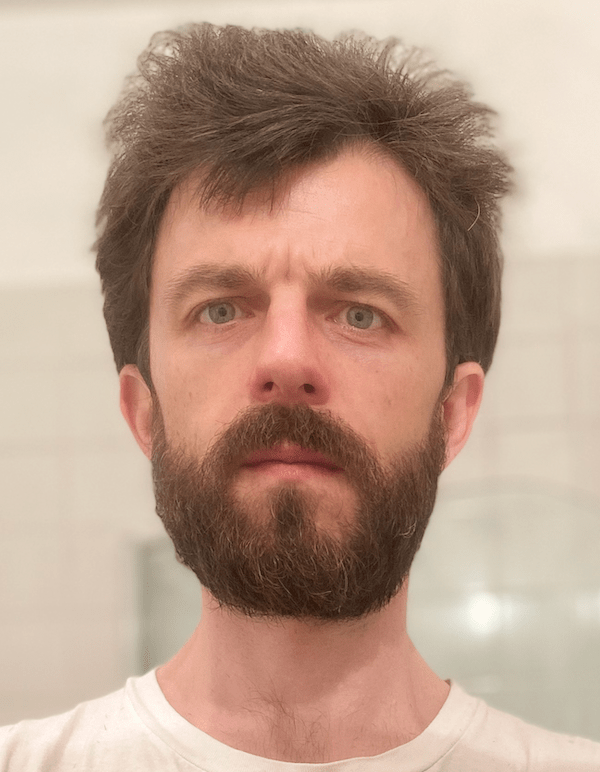
What has changed is my beard though. I no longer have it. May 15th did not mark the end of NYC’s shutdown, let alone the end of our struggle with COVID-19, which I believe remains in its early days, but the 15th nonetheless felt like a turning point, and to mark it, I took some pictures. (The whole transformation series can be found on Instagram.)

Enjoy!

Screen Shot 2020-05-17 at 12.28.30 PM
Here’s what two months of shutdown looked like on my face
Screen Shot 2020-05-17 at 12.28.47 PM
Depending on one’s perspective, this could easily be called the high or low point of the transformation…
Screen Shot 2020-05-17 at 12.29.08 PM
And, voilà! I was made brand new (if in need of a duster brush for my neck)

As for the weather, here’s what the trends looked like in March and April in New York City.

Marc-April 2020 Temperatures
I haven’t taken the time to fill this in further, but if memory serves, the weather was actually more or less consistent from some time in February until about three days ago. Strange, to say the least, and another ominous, if indefinite, sign of the greater crisis of climate disruption which remains as ambient and ever-present as the air.

In Wuhan, official new daily cases had dropped into the double digits within a month and a half of the city’s shutdown, and gone to zero by the two-month mark. Here in New York City, we’re approaching the two-month mark ourselves, and still seeing close to 200 hundred new hospitalizations (not cases!) a day, and hundreds – if not more than a thousand – new confirmed cases daily. More worrying still, the trends in COVID-19 cases, hospitalizations, and deaths in NYC are strongly skewed right, and the tapering off has been as gradual as one would expect given the laxity of our measures and the uneven extent to which the population is taking seriously social distancing measures.

I wish that I could say we’re only hurting ourselves, but we’re actually hurting each other. As it is, China continues to see new outbreaks almost daily – to which the Chinese Government seems to be responding aggressively – and we should expect to face similar challenges in New York as we inch forward.

As the City inches forward, so too will I inch, but now, beard-free and very much ready to make the most that circumstances allow of late spring and early summer. We may not be able to live our lives as fully as we’d like right now, but we should live them as fully as we possibly can.


Reality Is Real

And so too is history. A short piece today to remind readers (and myself) of the obvious.

The New York Times headlined this morning: “Coronavirus Cases Slow in U.S., but the Big Picture Remains Tenuous”; have we forgotten everything that Wuhan, Milan, and New York City should have taught us? As prospectuses always warn, “Past performance is no guarantee of future results,” but in this instance, perhaps the warning should be amended to read, “Present performance is no guarantee of future results, but past performance almost certainly is.”

The Times article goes on to proclaim:

The nation has reached a perilous moment in the course of the epidemic, embracing signs of hope and beginning to reopen businesses and ease the very measures that slowed the virus, despite the risk of a resurgence. With more than two-thirds of states significantly relaxing restrictions on how Americans can move about over the last few weeks, an uptick in cases is widely predicted.

So why tell a lie in the headline, given that many people aren’t very good or thorough readers of the news? Even as the Times itself, among other news outlets, has done good reporting on the inaccuracy and inadequacy of official COVID-19 case and death counts – arguing that these counts drastically understate the severity of the disease’s impact in the US and around the world – the paper continues to point to the same flawed and misleading data in its own reportage.

What did the suffering and death in Wuhan, Milan, New York City, and manywheres else show? That having a small number of confirmed cases now tells us absolutely nothing about either how many actual cases we have at present, or how many infections or deaths we can expect in the near future. I’ll now do some very basic math. According to the Hopkins tracker, the United States is currently reporting ~1.5 million confirmed COVID-19 cases to date and ~90,000 deaths. If those figures represented all of the actual infections and deaths, they would give an ~IFR of:

90,000 / 1,500,000 ~ 6%.

That’s very high. We can speculate that the US strains are especially virulent, that the US population is especially unhealthy, that our healthcare system is (for a rich country) especially flawed, etc., but all that strikes me as obfuscation. Based on a growing body of increasingly reliable evidence, it seems likely that the actual COVID-19 IFR is somewhere between 0.5% and 1%. We also have reasonably strong data suggesting that death counts in the US and in many places around the world undercount the death toll by something like 50%. Obviously, the extent of the undercount will vary significantly by jurisdiction, but I’ll use 50% here for simplicity.

If the US death toll reflects a 50% undercount, then closer to 135,000 people in the US have already died of COVID-19. If we err on the high side and assume a 1% IFR for COVID-19, 135,000 deaths would indicate that there have already been:

135,000 / 0.01  = 13.5 million cases.

That would be neither here nor there if we’d actually succeeded in suppressing or eliminating the virus in the US, but we obviously haven’t. This math does make clear that we’re only actually confirming something like 10% (at the high end) of actual infections, suggesting that the new confirmed case counts to which the Times points are – as the Times itself has shown elsewhere – almost totally meaningless.

Let’s say the case counts were meaningful though, which they’re not. We also know that there tends to be a significant lag between infection and confirmation of infection (for people who do manage to get tested): Incubation period is ~5 days; people who require hospitalization often take a week or two before becoming sick enough to seek medical attention; for those able to get tested, there can be a multiple-day lag in receiving test results; etc. All of which is to say, if infection rates started spiking on Monday as many states moved to reopen, we wouldn’t know it yet by the official numbers (and might not know it for another week), and yet we’d be sitting, as a country, on top of a crisis – volcanic and about to erupt – just as we were, as a City, in NYC in early March.

The Times piece actually says as much, but it does so in a mincingly equivocal fashion, while consistently quoting figures (eg, a projected death toll of 113,000 by June 6th) that its own reportage has shown to be misleading at best, patently false at worst. Put simply: The new confirmed case numbers fell modestly over the course of the past week because, until last Monday, most of the country had been under some level of shelter-in-place/stay-at-home order for at least a few weeks, and the hardest hit parts of the country had been under such for significantly longer (though to the Times credit, it does disaggregate New York City case numbers from those for the rest of the US).

How has the Times failed? Now is the time to be raising the alarm, but instead our paper of record is, once again, hedging and playing “both sides,” as if the virus itself understood politics. Reopening prematurely was more or less guaranteed to lead to a spike in infections. The viciousness of our culture/economy – epitomized in institutions like jails and prisons, immigration jails, meatpacking plants, nursing homes, etc. and in the working and living conditions of the poor, especially the undocumented, immigrant, Black, and Indigenous – will almost certainly amplify that national spike.

How long will it be before Senator Rick Scott has to swallow his words? Not very long is my best estimate. The magical thinking is killing us, though disparately, and what is already a national crisis of historic proportions is in the process of growing rapidly much much worse.